.svg)


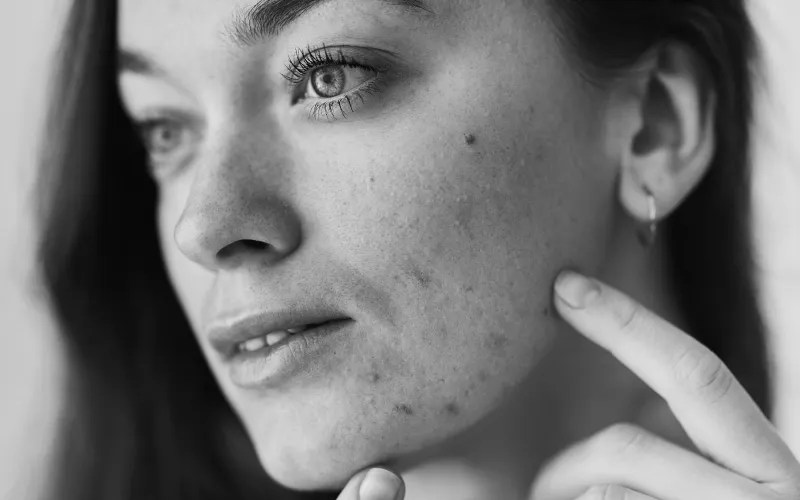
Acne is one of the most common skin conditions, affecting people of all ages. While active breakouts can be frustrating, the lasting impact of acne often comes in the form of scarring — which can affect both skin texture and confidence long after the acne itself has resolved.
Understanding how acne scars form — and how they can be treated — is key to restoring smoother, healthier-looking skin.
What Causes Acne Scarring?
Acne scars develop when inflammation penetrates deeper layers of the skin. This can damage underlying tissue, disrupting normal healing and collagen production.
In many cases, fibrotic bands form beneath the skin. These bands tether the surface downwards, creating the characteristic depressed or indented scars often seen in:
- Rolling scars
- Boxcar scars
These types of scars are not just surface-level concerns — they are structurally anchored beneath the skin, which is why topical treatments alone are often ineffective.
A Targeted Approach: Subcision for Acne Scarring
One of the most effective treatments for certain types of acne scars is subcision — a specialised, minimally invasive procedure designed to address the root cause of depressed scars.
How Subcision Works
Subcision involves the use of a fine needle or specialised cannula to carefully release the fibrotic bands beneath the scar. By breaking these attachments:
- The skin is freed and able to lift
- The depth of the scar is immediately reduced
- The surface appears smoother and more even
But the benefits go beyond mechanical release.
Stimulating Natural Healing & Collagen Production
A key advantage of subcision is that it stimulates the body’s natural healing response.
The controlled micro-trauma created during the procedure triggers:
- New collagen production
- Tissue regeneration
- Gradual improvement in skin texture
Over time, this process helps to further smooth the skin and improve overall contour — delivering both immediate and progressive results.
Key Benefits of Subcision Treatment
- Improves the appearance of acne scars
- Releases tethered (anchored) scars
- Stimulates natural collagen production
- Minimally invasive with targeted precision
- Enhances overall skin texture and smoothness
What to Expect After Treatment
Because subcision works beneath the skin, some temporary side effects are expected, including:
- Bruising
- Swelling
- Tenderness
These typically resolve within 1–2 weeks.
However, the real transformation happens over time. As collagen continues to remodel in the treated area, results become more noticeable over several months, leading to long-term improvement in both texture and skin quality.
Combining Treatments for Optimal Results
Subcision is often used as part of a comprehensive treatment plan. For enhanced outcomes, it may be combined with:
- Microneedling
- Laser therapy
- Targeted skin treatments
This multi-layered approach allows for both structural correction and surface refinement, delivering more complete and natural-looking results.
A Personalised, Doctor-Led Approach
At Fluid Medical, acne scarring is approached with a focus on precision, safety, and long-term skin health. Every treatment begins with a thorough consultation to assess your skin, scar type, and goals — ensuring a personalised plan that delivers meaningful results.
If acne scarring has been holding you back, there are effective, medically guided solutions available to help restore smoother, more confident skin.
Article Author

.svg)
.svg)
.svg)