.svg)


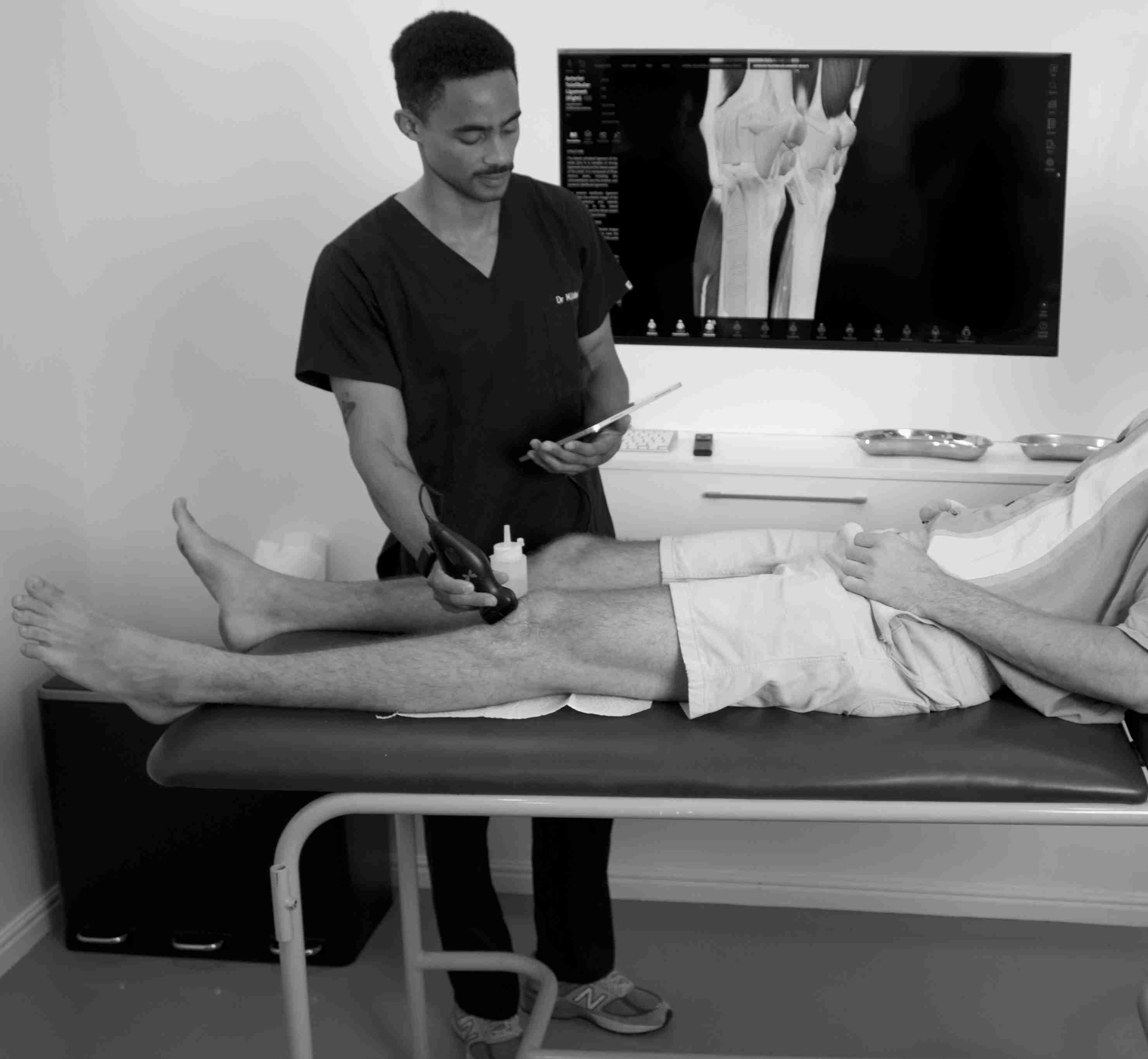
Runner’s Knee (Patellofemoral Pain) Treatment in Cape Town | Fluid Medical
Runner’s knee, medically known as patellofemoral pain syndrome, is one of the most common causes of knee pain in active adults and athletes. At Fluid Medical in Cape Town, we regularly treat runners, HYROX athletes, gym-goers, and weekend warriors struggling with persistent pain around or behind the kneecap.
What Is Runner’s Knee?
Runner’s knee presents as a dull, aching pain around or behind the patella (kneecap). It often worsens with running, stair climbing, squatting, lunging, or even prolonged sitting. Many patients describe stiffness when standing up after sitting for long periods.
Importantly, runner’s knee is usually not caused by a single injury. Instead, it develops gradually due to overload and biomechanical stress between the kneecap and the thigh bone (femur).
Why Does Runner’s Knee Happen?
The most common cause is training load error — increasing mileage, intensity, or frequency too quickly without adequate recovery. However, load is only part of the story.
Other contributing factors include:
- Weak hip and glute muscles, allowing the knee to collapse inward
- Poor running biomechanics
- Limited ankle mobility
- Tight quadriceps or iliotibial band
- Inappropriate or worn footwear
When the hip and glute muscles do not adequately control leg alignment, pressure increases behind the kneecap, leading to irritation and pain.
Why Rest Alone Doesn’t Fix It
Many athletes stop running when pain starts. While short-term rest may reduce symptoms, it does not address the underlying cause. Without correcting strength deficits and movement patterns, pain often returns as soon as training resumes.
At Fluid Medical, our approach focuses on identifying the root cause rather than simply masking symptoms.
Evidence-Based Treatment for Runner’s Knee
Effective runner’s knee treatment includes:
1. Targeted Strength Training
Progressive strengthening of the glutes, quadriceps, calves, and core is essential.
2. Load Management
We guide patients in modifying mileage, intensity, and frequency to allow tissue recovery while maintaining fitness.
3. Gradual Return to Running
A structured return-to-run program prevents relapse and builds long-term resilience.
4. Movement & Biomechanics Assessment
We assess gait, squat mechanics, and limb alignment to identify contributing factors.
Short-term taping or bracing may help manage symptoms during rehabilitation, but long-term success depends on strength and load control.
When Do You Need Imaging or Specialist Care?
Imaging is not always necessary for runner’s knee. However, persistent swelling, locking, instability, significant trauma, or failure to improve with structured rehabilitation may require further evaluation. At Fluid Medical, we offer thorough clinical assessments and can arrange appropriate imaging if needed.
If you are experiencing knee pain in Cape Town, early intervention prevents chronic problems. Our sports medicine team at Fluid Medical provides comprehensive runner’s knee treatment focused on long-term performance, prevention, and return to sport.
Book your consultation with Fluid Medical today and get back to training pain-free.
Article Author

.svg)
.svg)
.svg)